• 0 Posts
  • 70 Comments
Joined 8 months ago
cake
Cake day: March 17th, 2026

help-circle

  • Have you? The paradox of tolerance isn’t the issue you make here.

    Let’s be real: most social media commenters have not studied it, and they’re regurgitating junk they read on social media.

    The actual argument wasn’t that the intolerant of any kind would spoil the existence of a tolerant[1] society: that butchers the entire argument. The paradox specifically refers to the intolerant of open society itself. It’s about defending the institutions of open society against movements that reject reasoned persuasion and seek power through coercion or violence. Open society can consistently tolerate a wide range of beliefs while refusing to tolerate violations of conditions that make tolerance possible.

    Consequently, someone may hold repugnant, exclusionary views and still remain within the framework of an open society, provided they continue to accept nonviolent political competition and the institutions that sustain it.

    For corroboration, read the original passage that articulated it

    Less well known is the paradox of tolerance: Unlimited tolerance must lead to the disappearance of tolerance. If we extend unlimited tolerance even to those who are intolerant, if we are not prepared to defend a tolerant society against the onslaught of the intolerant, then the tolerant will be destroyed, and tolerance with them.—In this formulation, I do not imply, for instance, that we should always suppress the utterance of intolerant philosophies; as long as we can counter them by rational argument and keep them in check by public opinion, suppression would certainly be most unwise. But we should claim the right to suppress them [intolerant ideologies] if necessary even by force; for it may easily turn out that they are not prepared to meet us on the level of rational argument, but begin by denouncing all argument; they may forbid their followers to listen to rational argument, because it is deceptive, and teach them to answer arguments by the use of their fists or pistols.

    which was in a footnote in the political philosophy book The Open Society and Its Enemies by Karl Popper. The rest of the book proceeded to argue for an open society governed through nonviolent political competition that depends on free inquiry, intellectual liberty, open debate. He wasn’t arguing to suppress intellectual liberty or openness, and he wasn’t arguing that open society is threatened by the mere existence of adverse beliefs.


    1. Tolerance in political philosophy more strictly means the acceptance of an objectionable idea or practice. Intolerance more strictly means the rejection of such idea or practice. A society rejects by prohibiting. A movement rejects a society by violating or suppressing its conditions of existence (or norms). ↩︎


  • doesn’t apply here.

    The paradox is about defending the institutions of open society against movements that reject reasoned persuasion and seek power through coercion or violence. The “intolerant” in the paradox are not merely intolerant in the everyday sense. They are intolerant[1] of the open society itself.

    The original passage that articulated it

    Less well known is the paradox of tolerance: Unlimited tolerance must lead to the disappearance of tolerance. If we extend unlimited tolerance even to those who are intolerant, if we are not prepared to defend a tolerant society against the onslaught of the intolerant, then the tolerant will be destroyed, and tolerance with them.—In this formulation, I do not imply, for instance, that we should always suppress the utterance of intolerant philosophies; as long as we can counter them by rational argument and keep them in check by public opinion, suppression would certainly be most unwise. But we should claim the right to suppress them [intolerant ideologies] if necessary even by force; for it may easily turn out that they are not prepared to meet us on the level of rational argument, but begin by denouncing all argument; they may forbid their followers to listen to rational argument, because it is deceptive, and teach them to answer arguments by the use of their fists or pistols.

    was in a footnote in the political philosophy book The Open Society and Its Enemies by Karl Popper.

    An open society is governed through nonviolent political competition that depends on free inquiry, intellectual liberty, open debate. Consequently, someone may hold repugnant, exclusionary views and still remain within the framework of an open society, provided they continue to accept nonviolent public choice and the institutions that sustain it. Such a person is not the target of the paradox.

    Rather, those who violate the framework of an open society by suppressing the conditions it depends on (free inquiry, intellectual liberty, open debate) are closer to the target of the paradox.

    Popper’s argument is not about silencing disagreeable beliefs as social media commonly claims. Open society can consistently tolerate a wide range of beliefs while refusing to tolerate violations of conditions that make tolerance possible. Since we aren’t specifically talking about such violators, the paradox simply doesn’t apply here.


    1. Tolerance in political philosophy more strictly means the acceptance of an objectionable idea or practice. Intolerance more strictly means the rejection of such idea or practice. A society rejects by prohibiting. A movement rejects a society by violating or suppressing its conditions of existence (or norms). ↩︎


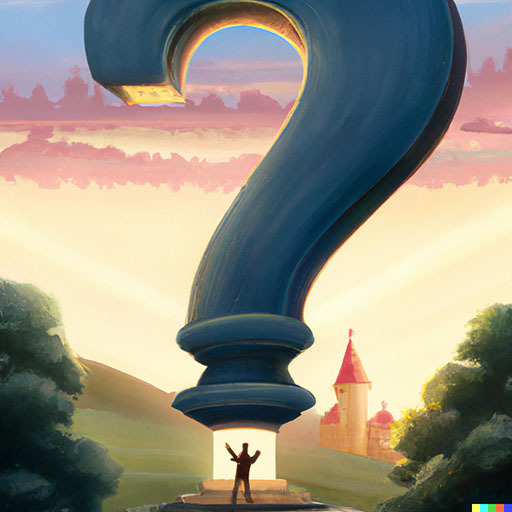

  • paradox of tolerance

    First of all, can you define tolerance & intolerance as articulated in the actual paradox posed by the source instead of distortion regurgitated on social media? It was a footnote in the political philosophy book The Open Society and Its Enemies comparing political systems (the philosophies underpinning them) by defending the merits of open society (such as liberal democracy) over its newer, more fashionable competitors at the time (totalitarianism such as fascism & communism). The colloquial notion of intolerance used in social media (bigotry, exclusionary ideas disrespectful of differences) isn’t the meaning in political philosophy. There, the scope of discussion is political systems governing society. Accordingly, tolerance means the acceptance of objectionable beliefs or practices, and intolerance means their rejection.

    The original passage is illuminating

    Less well known is the paradox of tolerance: Unlimited tolerance must lead to the disappearance of tolerance. If we extend unlimited tolerance even to those who are intolerant, if we are not prepared to defend a tolerant society against the onslaught of the intolerant, then the tolerant will be destroyed, and tolerance with them.—In this formulation, I do not imply, for instance, that we should always suppress the utterance of intolerant philosophies; as long as we can counter them by rational argument and keep them in check by public opinion, suppression would certainly be most unwise. But we should claim the right to suppress them [intolerant ideologies] if necessary even by force; for it may easily turn out that they are not prepared to meet us on the level of rational argument, but begin by denouncing all argument; they may forbid their followers to listen to rational argument, because it is deceptive, and teach them to answer arguments by the use of their fists or pistols.

    The type of intolerance they refer to is the kind that uses force and refuses debate, thus violating open society. They even explicitly reject that we should in general “suppress the utterance of intolerant philosophies” as long as rational argument & public opinion still govern public choice.

    In general, the paradox is resolved by drawing a distinction between intolerance of a tolerant society and other kinds of intolerance: intolerance of a tolerant society is an objectionable element, and intolerance of that objectionable element is a distinct element. A tolerant society can coherently reject the objectionable element and accept intolerance of the objectionable element.

    An open society is governed through public choice driven nonviolently by conditions of open inquiry, intellectual freedom, and competitive deliberation. In that context, open society is the tolerant society, and it may reject intolerance of the open society. Intolerance of an open society is literally rejecting it by violating it, ie, unjustified force or violence. Beliefs alone do not end nonviolent public choice.

    Consequently, no matter how objectionable their ideas, someone who permits nonviolent public choice and conditions for it still accepts open society: they are not intolerant of open society. They are not the subject of the paradox. To the contrary, those who would suppress their liberties are enemies of open society.

    Social media totally butchered the entire thesis!

    The intolerant of the paradox must literally not tolerate open society by violating it. They aren’t merely “intolerant” in the looser, colloquial sense.

    Open society is in no danger of the “intolerant” dragging them anywhere as long as the rest of society exercises their liberties to maintain the institutions of open society and beat them at public choices. If they can’t manage even that despite all the capacity granted to the public to do it, then society itself has pretty much forfeited open society.


  • I'm an empath. Sometimes I can tell how people are feeling simply by deciding how I think they feel in my own mind and instantly believing it.

    “Imposing empathy” is a strange idea: not sure anyone can be made to give a fuck no matter how forcefully it’s demanded.
    The ancient Stoics also thought the mind was untamable by an outside force, even slavery.
    Seneca the Younger wrote

    It is a mistake to imagine that slavery pervades a man’s whole being; the better part of him is exempt from it: the body indeed is subjected and in the power of a master, but the mind is independent, and indeed is so free and wild, that it cannot be restrained even by this prison of the body, wherein it is confined.

    That idea of the nature of the mind led to the idea of natural human equality and natural rights.
    Centuries later, Martin Luther reformulated Stoic doctrine that the “inner part cannot be delivered into bondage” into freedom of conscience.
    This inspired the concepts of fundamental rights and modern open society founded to protect them.

    This idea that someone can “impose empathy” seems like regressive folly.
    “Impose” is the wrong word.


  • inline images are kind of trouble brewing for accessibility They’re not: the other image intensive platforms mentioned before handle them fine. The fediverse builds on the web, and web accessibility is quite mature.

    In particular, the alt attribute has existed since HTML 1.2 draft in 1993 (same year as initial release of HTML) when text-based web browsers (which still exist) were common. The web was accessible since the beginning.

    This reinforces the earlier point that web accessibility is not a limitation of capacity, but of will. The threadiverse is lagging.

    Yeah, okay, alt text can help, but not all users are going to write alt text

    That can be enforced & promoted in the environment. Platforms that do this better even in the fediverse were mentioned.

    (and I…don’t actually think that Threadiverse Markdown has a convention for adding inline image alt text at all, though I guess you could stick a manual caption beneath each image).

    It’s basic markdown.

    To add an image, add an exclamation mark (!), followed by alt text in brackets, and the path or URL to the image asset in parentheses. You can optionally add a title in quotation marks after the path or URL.

    AI image recognition AI recognition is unnecessary and faulty. The rest of the web doesn’t need it, and the other platforms mentioned before don’t rely on it.

    As WebAIM states

    Although technology is getting better at recognizing what an image depicts, algorithms alone cannot understand what an image means within the context of the overall page. A maple leaf might represent Canada, or it might just illustrate the leaf of a tree. Web page authors must provide alternative text that represents the content and function of their images.

    a text alternative is a substitute that conveys equivalent purpose in context. Unless AI reads an author’s mind, it will miss contextual meaning & intent. It will also garble text, misinterpret non-text content, sequence complex content wrong.

    The alt attribute in particular is typically accurate & equivalent, succinct, not redundant. Complex images get a succinct alt attribute and an adjacent text alternative or link to text alternative.

    Of course, an image of text doesn’t need to be an image at all. Culture & enforcement could discourage that anti-pattern.

    For the threadiverse, the top issue is images lacking text alternative. However, text alternatives apply to any non-text content[1] and web accessibility encompasses more than that, which the platform mostly addresses.


    1. the formal guideline:

      Provide text alternatives for any non-text content so that it can be changed into other forms people need, such as large print, braille, speech, symbols or simpler language.

      ↩︎


  • lmmarsano@fedinsfw.apptoPolitical Memes@lemmy.world•Radical
    link
    fedilink
    English
    arrow-up
    1
    arrow-down
    2
    ·
    5 days ago

    Another superficial style over substance fallacy: you argue over style rather than address substance. As remarked earlier, such cheap, emotionally-stunted tactics for a superficial, self-centered mind aren’t a great argument for empathy.

    Same advice as before: self-reflect, take personal inventory.

    Earlier remarks stand.


  • lmmarsano@fedinsfw.apptoPolitical Memes@lemmy.world•Radical
    link
    fedilink
    English
    arrow-up
    2
    arrow-down
    2
    ·
    edit-2
    5 days ago

    Hostility biased to construe a forthright criticism maliciously for not being ingratiating to your standards demonstrates an insecurity more concerned with saving face rather than consideration for points others make, so it’s not particularly empathetic or enlightened, and it’s somewhat entitled. A just person cares more about doing what is right than in satisfying their ego even when it seems to cost them and goes unappreciated. Their acts are an unusual wonder & in the scheme of humanity radical.


  • lmmarsano@fedinsfw.apptoPolitical Memes@lemmy.world•Radical
    link
    fedilink
    English
    arrow-up
    1
    arrow-down
    1
    ·
    edit-2
    5 days ago

    So, they have less empathy for the outgroup of puppets? That’s not a strong argument for inborn universal empathy.

    While I can’t speak for you, I remember imagining inanimate objects had feelings as a kid, which made choices to reject something absurdly difficult.

    The researchers thought

    These findings suggest that the identification of common and contrasting personal attributes influences social attitudes and judgments in powerful ways, even very early in life.

    The ingroup bias is corroborated in expectations of third-party punishment varying according to group alignment of third-party & victim. The body of research supports an early-emerging preference for retribution and discrimination by group alignment. That’s an empathy-limited judgment more aligned with tribalism than a regard for individuals as morally belonging to a single universal group.

    Facial preferences are part of an established body of research showing the early, undirected manifestation of discriminatory biases. On racism, for example

    Race is a multidimensional and socially constructed (Smedley & Smedley, 2005) lens through which even infants engage with the social world. Research from racially and culturally diverse contexts has shown that 3-month-olds prefer faces from particular racial groups (Bar-Haim, Ziv, Lamy, & Hodes, 2006), and 9-month-olds use race to categorize faces (Anzures, Quinn, Pascalis, Slater, & Lee, 2010). Before entering preschool, 3-year-old United States-based children associate low-status racial groups with negative traits (Dunham, Chen, & Banaji, 2013; Newheiser, Dunham, Merrill, Hoosain, & Olson, 2014), and by age 4, they associate particular racial groups (e.g., Whites) with high status markers (e.g., wealth; Olson, Shutts, Kinzler, & Weisman, 2012). And United States children experience the negative consequences of living in a racialized world: seven-year-olds experience racial discrimination (Marcelo & Yates, 2019), and race-based discrimination is widespread in schools (U.S. Government Accountability Office, 2018).

    the APA has argued racist ideas can emerge early, so adults need to talk about race with their children earlier. Such biases are not very empathetic and need correction.

    Empathy is a skill that needs development. The readily observed tribalism & purity policing here speaks volumes on that.


  • lmmarsano@fedinsfw.apptoPolitical Memes@lemmy.world•Radical
    link
    fedilink
    English
    arrow-up
    3
    arrow-down
    3
    ·
    6 days ago

    Empathy as a moral guide usually refers to universal empathy rather than a biased, discriminatory empathy favoring only an in-group.

    Infants show biases such as in-group favoritism early

    But the next finding surprised the researchers: When the puppet that dropped the ball did not share the babies’ taste in food, the infants preferred the mean puppet to the helper. In other words: Babies prefer someone who is nice to an individual similar to themselves, but they also prefer someone who is mean to a dissimilar individual.

    That’s not empathetic.


  • lmmarsano@fedinsfw.apptoPolitical Memes@lemmy.world•Radical
    link
    fedilink
    English
    arrow-up
    3
    arrow-down
    3
    ·
    edit-2
    5 days ago

    True, and an awful lot of fools react with hostility to facts that offend them. Where is their empathy?

    dang I didn’t expect the downvotes

    Welcome to the community: that toxic idiocy is the norm around here. It makes the irony of their claims to empathy richer.


  • lmmarsano@fedinsfw.apptoPolitical Memes@lemmy.world•Radical
    link
    fedilink
    English
    arrow-up
    9
    arrow-down
    4
    ·
    edit-2
    6 days ago

    checks alt text

    (nothing)
    Case in point: this image is basically pure text, but in a form unperceivable to people who need actual text.
    No empathy there.
    Empathy truly is radical: far easier to proclaim than to universally practice.

    Those who react with hostility when lapses in empathy are pointed out likely have a special deficiency in empathy: they need to self-reflect & take inventory of themselves.

