- 845 Posts
- 1.45K Comments




Not sure I get the joke?

Corn is about evenly split between ethanol and animal feed in the US. That’s also based on USDA numbers that under count the amount going to animal feed by excluding exports and excluding more indirect ways corn go to animal feed
Today’s corn crop is mainly used for biofuels (roughly 40 percent of U.S. corn is used for ethanol) and as animal feed (roughly 36 percent of U.S. corn. […] Only a tiny fraction of the national corn crop is directly used for food for Americans, much of that for high-fructose corn syrup.
https://www.scientificamerican.com/article/time-to-rethink-corn/
Not who are replying to, but I’ve got some good news, moving to plant-based diets is also better for wild animals too
Livestock farmers often claim that their grazing systems “mimic nature”. If so, the mimicry is a crude caricature. A review of evidence from over 100 studies found that when livestock are removed from the land, the abundance and diversity of almost all groups of wild animals increases
And not only that but fewer crops are needed for animal feed so less disruption overall from that end too
If everyone shifted to a plant-based diet we would reduce global land use for agriculture by 75%. This large reduction of agricultural land use would be possible thanks to a reduction in land used for grazing and a smaller need for land to grow crops.
Not that datacenters are great, but agriculture should not be glossed over like that. The place the water goes for agriculture is not where we want / need the water to go. I.e into the plants moved elsewhere and into the air carried away. It depletes these waterways
Correspondingly, our hydrologic modelling reveals that cattle-feed irrigation is the leading driver of flow depletion in one-third of all western US sub-watersheds; cattle-feed irrigation accounts for an average of 75% of all consumptive use in these 369 sub-watersheds. During drought years (that is, the driest 10% of years), more than one-quarter of all rivers in the western US are depleted by more than 75% during summer months (Fig. 2 and Supplementary Fig. 2) and cattle-feed irrigation is the largest water use in more than half of these heavily depleted rivers
https://digitalcommons.unl.edu/cgi/viewcontent.cgi?article=1064&context=wffdocs
“meanwhile it’s eternally captured by a data”
The closed-water loop systems are that concerning water-usage wise at all. They don’t use as much water. It’s the open-loop ones with evaporation tower that use much more water. Those also go into the air and flow somewhere else, same as it is with agriculture
“if not contaminated with chemicals too”
Runoff with pollution from datacenters is more of an issue from construction from my understanding rather than the cooling (not that this isn’t an issue!)
It’s worth noting that agriculture has continuous problems with runoff. Fertilizer and manure runoff is a massive concern from agriculture, often a massive one for local water quality. For instance, one region in NZ needs a 12x reduction in the dairy industry nearby just to meet safe drinking water standards
And that place is not where we want / need the water to go. I.e into the plants moved elsewhere and into the air carried away. It depletes these waterways
Correspondingly, our hydrologic modelling reveals that cattle-feed irrigation is the leading driver of flow depletion in one-third of all western US sub-watersheds; cattle-feed irrigation accounts for an average of 75% of all consumptive use in these 369 sub-watersheds. During drought years (that is, the driest 10% of years), more than one-quarter of all rivers in the western US are depleted by more than 75% during summer months (Fig. 2 and Supplementary Fig. 2) and cattle-feed irrigation is the largest water use in more than half of these heavily depleted rivers
https://digitalcommons.unl.edu/cgi/viewcontent.cgi?article=1064&context=wffdocs
It’s around 15% exported in the American west and 4% nation wide. That’s not nothing, but it’s mostly for domestic consumption, the headlines about it are kind of misleading by making it sound like a majority
Alfalfa is the third largest economic product in the US, but only 4% is exported annually. In the western states, however, which are high producers close to shipping ports to major export markets like China, Saudi Arabia and Japan, about 15% is exported each year
https://www.theguardian.com/us-news/2019/mar/25/california-water-drought-scarce-saudi-arabia
Current datacenters are much more concerning environmentally for their electricity usage. The previous 20 years before the current LLM boom, their electrical usage was more or less flat. In the US, it’s now estimated to go from 5% of the US electrical demand to 15% in the next few years and is delaying fossil fuel plant closures
The water usage is concerning in some local situations (often more so from pollution from poor construction) for various data centers, but agriculture and especially animal agriculture really does dominate water usage in water scarce areas and is enormously wasteful with water. For instance, in the American West, it’s mostly all going to animal feed where plants for human consumption use significantly less


This is not to say it’s good that it’s using this water. Just that we really should actually also be very much concerned about the agricultural impact because it’s horribly inefficient. Producing animal products is massively inefficient

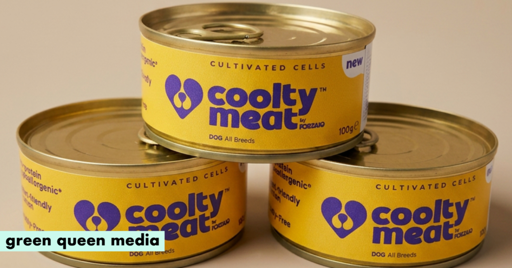
There are also a number of companies doing culture meat for cats. Cats very much can eat more than just animal products, so using other ingredients for some portion of it would not be an issue
So if i created my own keyboard from scratch on a open hardware microcontroller, could i implement this?
The USB controller that interrupts the CPU lives on the other side of the connection, so you’d just be building hardware that responses to the polling. If you’re curious what that looks like, Ben Eater has a cool video looking at what that looks like for a USB 2 keyboard https://youtu.be/wdgULBpRoXk
There’s also the case of Bluetooth dongle keyboards not working in UEFI (except that one) but USB always do. Is it this or just the UEFI not having drivers?
I am no USB Keyboard expert, but through the power of looking it up it seems like most of these do not operate as a HID (human interface device, like mouse and keyboard) so need driver support, but some start up with a basic HID proxy which might be you have one that works. From an older thread about BIOSes rather than UEIFs
A keyboard using Bluetooth cannot access the BIOS. Logitech Bluetooth keyboards get around this by having a dongle that pairs with the keyboard in a more basic, non-Bluetooth mode until the driver kicks in and switches modes. Microsoft might be similar mode with their keyboards and dongles, but I cannot confirm that.
https://superuser.com/questions/242457/use-a-bluetooth-keyboard-to-access-edit-the-bios

Technically, interrupts are still often involved… just from the USB controller on the state of the polling instead of the keyboard directly on a keypress
Some keyboards implement the USB Boot Keyboard profile specified in the USB Device Class Definition for Human Interface Devices (HID) v1.11 and are explicitly configured to use the boot protocol. These are limited to 6-key rollover (6KRO) and will interrupt the CPU every time the keyboard is polled (even if there is no state change) unless the USB controller is programmed to tell the keyboard to respond with negative acknowledgments, which the USB controller discards in hardware without interrupting the CPU, when there are no state changes to report
https://en.wikipedia.org/wiki/USB_human_interface_device_class#Keyboards
Any economic system is going to face enormous pressure with the mass demand not being addressed, capitalistic or not. The demand side of the equation is going to be changed if you want to avoid an uprising. We’re not talking about some small level of reduction in production
For instance, if you wanted to move to a grass-fed only beef production, you could only supply at most around a quarter of all current beef production while using 100% of grassland (which would create deforestation pressure). This is while simultaneously increasing methane emissions and number of cattle slaughtered. If you want to avoid a methane emission increase, you’d need to go far lower production
We model a nationwide transition [in the US] from grain- to grass-finishing systems using demographics of present-day beef cattle. In order to produce the same quantity of beef as the present-day system, we find that a nationwide shift to exclusively grass-fed beef would require increasing the national cattle herd from 77 to 100 million cattle, an increase of 30%. We also find that the current pastureland grass resource can support only 27% of the current beef supply (27 million cattle), an amount 30% smaller than prior estimates
Taken together, an exclusively grass-fed beef cattle herd would raise the United States’ total methane emissions by approximately 8%.
https://iopscience.iop.org/article/10.1088/1748-9326/aad401/pdf
As long as animal agriculture exists in any scale it’s the invariable outcome. As long as there’s mass demand, there will continue to be mass production
 7·2 months ago
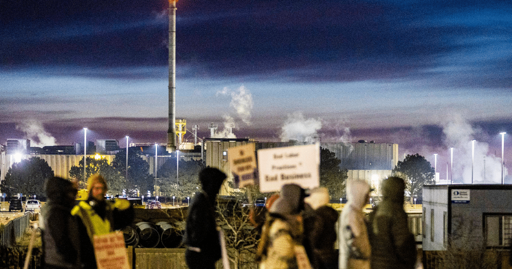
Starting this off with: I am not an epidemiologist and most of the epidemiologist I’m seeing online aren’t yet too concerned
That being said, they have not found any rodents on the ship, though that does not mean they didn’t just miss them in their search. The version on the ship has been confirmed to be the Andes Virus (ANDV) which is human-to-human transmissible in a way that most hantavirus are not
It’s hard to say exactly how the virus will behave outside of a cruise ship (which are known for spreading diseases more than other locations), but we can potentially look at a past outbreak in 2018 in a small town for an idea
In this work, we described the isolation of the strain responsible for the largest ANDV PTP transmission outbreak, which occurred in the small town of Epuyén and began on November 2, 2018. This strain, ARG-Epuyén, exhibited a high capacity for PTP transmission, necessitating the implementation of quarantine measures to curtail further spread [8]. The median reproductive number (the mean number of secondary cases caused by an infected person) was 2.12 before control measures were implemented and subsequently dropped to below 1.0 by late January
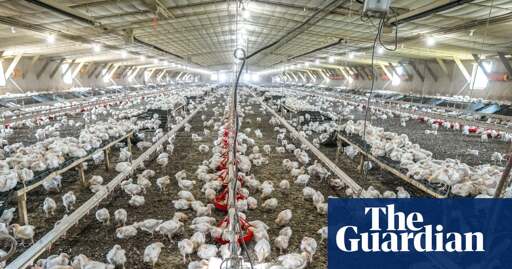
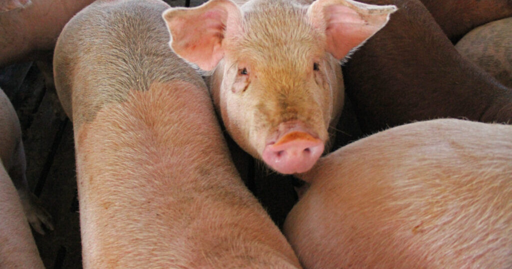
Almost all global meat production happens in factory farms. Especially in developed countries with the highest meat consumption. I will look at the US for an example:
Currently, ‘grass-finished’ beef accounts for less than 1% of the current US supply
https://iopscience.iop.org/article/10.1088/1748-9326/aad401
We estimate that 99% of US farmed animals are living in factory farms at present. By species, we estimate that 70.4% of cows, 98.3% of pigs, 99.8% of turkeys, 98.2% of chickens raised for eggs, and over 99.9% of chickens raised for meat are living in factory farms. Based on the confinement and living conditions of farmed fish, we estimate that virtually all US fish farms are suitably described as factory farms, though there is limited data on fish farm conditions and no standardized definition.[1] Land animal figures use data from the USDA Census of Agriculture[2] and EPA definitions of Concentrated Animal Feeding Operations.[3]
https://www.sentienceinstitute.org/us-factory-farming-estimates
Even if those other methods could magically do much better, which I significantly doubt given the history of those kinds of methods over promising and under delivering, it does relatively little good to look at any other method because they do not come close to scaling to the level of consumption we’re seeing here. A pasture only system could at most come to a small fraction of production. Using 100% of the land, which would create huge deforestation pressures
We model a nationwide transition [in the US] from grain- to grass-finishing systems using demographics of present-day beef cattle. In order to produce the same quantity of beef as the present-day system, we find that a nationwide shift to exclusively grass-fed beef would require increasing the national cattle herd from 77 to 100 million cattle, an increase of 30%. We also find that the current pastureland grass resource can support only 27% of the current beef supply (27 million cattle), an amount 30% smaller than prior estimates
[…]
If beef consumption is not reduced and is instead satisfied by greater imports of grass-fed beef, a switch to purely grass-fed systems would likely result in higher environmental costs, including higher overall methane emissions. Thus, only reductions in beef consumption can guarantee reductions in the environmental impact of US food systems.
https://iopscience.iop.org/article/10.1088/1748-9326/aad401
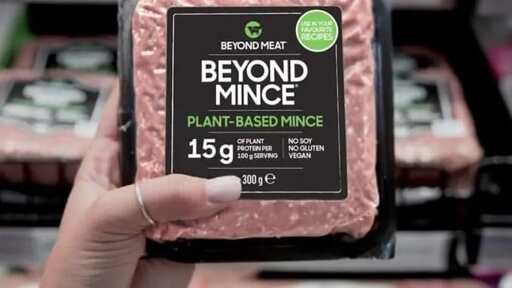
EDIT: It’s also worth noting that a lot of people that start on things like beyond and impossible end up eventually switching to much more whole plant-based foods in the end anyways. It allow a lot more easy room to bridge to whole foods than starting with just 100% whole food is for a lot of people
The process around meat is no less industrial either. Whole food plant-based diets come out ahead health wise of course, but the research comparing animal meats to beyond show beyond coming out ahead for health
In terms of environmental effects, processing is not a major factor at all. It’s hardly a minor one either
For most foods — and particularly the largest emitters — most GHG emissions result from land use change (shown in green) and from processes at the farm stage (brown). Farm-stage emissions include processes such as the application of fertilizers — both organic (“manure management”) and synthetic; and enteric fermentation (the production of methane in the stomachs of cattle). Combined, land use and farm-stage emissions account for more than 80% of the footprint for most foods.
[…]
Not just transport, but all processes in the supply chain after the food left the farm – processing, transport, retail and packaging – mostly account for a small share of emissions.
Not sure what you mean by BM (I assume Beyond Meat?), but every single plant-based food comes out insanely far ahead from animal based foods
Plant-based foods have a significantly smaller footprint on the environment than animal-based foods. Even the least sustainable vegetables and cereals cause less environmental harm than the lowest impact meat and dairy products [9].
https://www.mdpi.com/2072-6643/14/8/1614/html
If I source my beef or lamb from low-impact producers, could they have a lower footprint than plant-based alternatives? The evidence suggests, no: plant-based foods emit fewer greenhouse gases than meat and dairy, regardless of how they are produced.
[…]
Plant-based protein sources – tofu, beans, peas and nuts – have the lowest carbon footprint. This is certainly true when you compare average emissions. But it’s still true when you compare the extremes: there’s not much overlap in emissions between the worst producers of plant proteins, and the best producers of meat and dairy. https://ourworldindata.org/less-meat-or-sustainable-meat
Not who you’re replying to, but there’s one recipe with TVP that I like which cooks kind of close to that where you cook the TVP with only a little bit of vegetable broth and all the spices + onions. https://itdoesnttastelikechicken.com/easy-tvp-tacos/
If you think those are slop, I fear you are looking at bad recipes
Had to reread that like 5 times to realize you were not saying that you thought those were bad recipes










>>> print("proof by counterexample in a python REPL")
proof by counterexample in a python REPL
>>> x = 2; print(x)
2
>>> print("this is not ignored"); print("it's just mostly useless"); print("but you can use as many as you want")
this is not ignored
it's just mostly useless
but you can use as many as you want